
Building a collagen category for the next generation.
For years, the collagen industry had a simple, unchallenged formula: animal input equals skin output. Whether it came from bovine hides, fish scales or chicken sternums, collagen supplementation meant consuming animal by-products — often in high daily doses, and with questionable efficacy. Vegan options? None. Not serious ones, anyway.
That era is ending.
A new category is emerging, backed by science and driven by changing consumer values. Plant-based collagen alternatives — once seen as a nice story with no scientific leg to stand on — are finally delivering hard clinical proof. And the implications are massive.
The problem with the old model
Consumers today expect more. They want efficacy, yes. But they also care about sustainability, transparency, inclusivity, and ethical sourcing. The traditional collagen market doesn’t meet those expectations. Animal-based collagen peptides rely on waste streams from the meat and fishing industries. They raise questions about origin, allergens, religious suitability, and ecological footprint.
And then there’s the dose. 10 to 20 grams per day is standard for most animal collagen products. That’s a lot of powder to mix, and a lot of cost to carry — for results that, while promising, often lack strong clinical consistency.
Until now, vegan brands had little to offer in return. Most “plant-based collagen” products on the market were vague blends of vitamins, botanicals or collagen-boosting claims. None actually mimicked real human collagen. None had proven wrinkle, hydration or skin structure benefits. And none had strong clinical backing.
The science that changes everything
That has now changed. VeCollal® is the world’s first scientifically validated, biomimetic, plant-based collagen alternative. It replicates the amino acid profile of human collagen using entirely vegan ingredients. And it has now been clinically proven — in two separate university-led studies — to visibly improve the three biggest skin concerns:VeCollal® is the world’s first scientifically validated, biomimetic, plant-based collagen alternative. It replicates the amino acid profile of human collagen using entirely vegan ingredients. And it has now been clinically proven — in two separate university-led studies — to visibly improve the three biggest skin concerns:
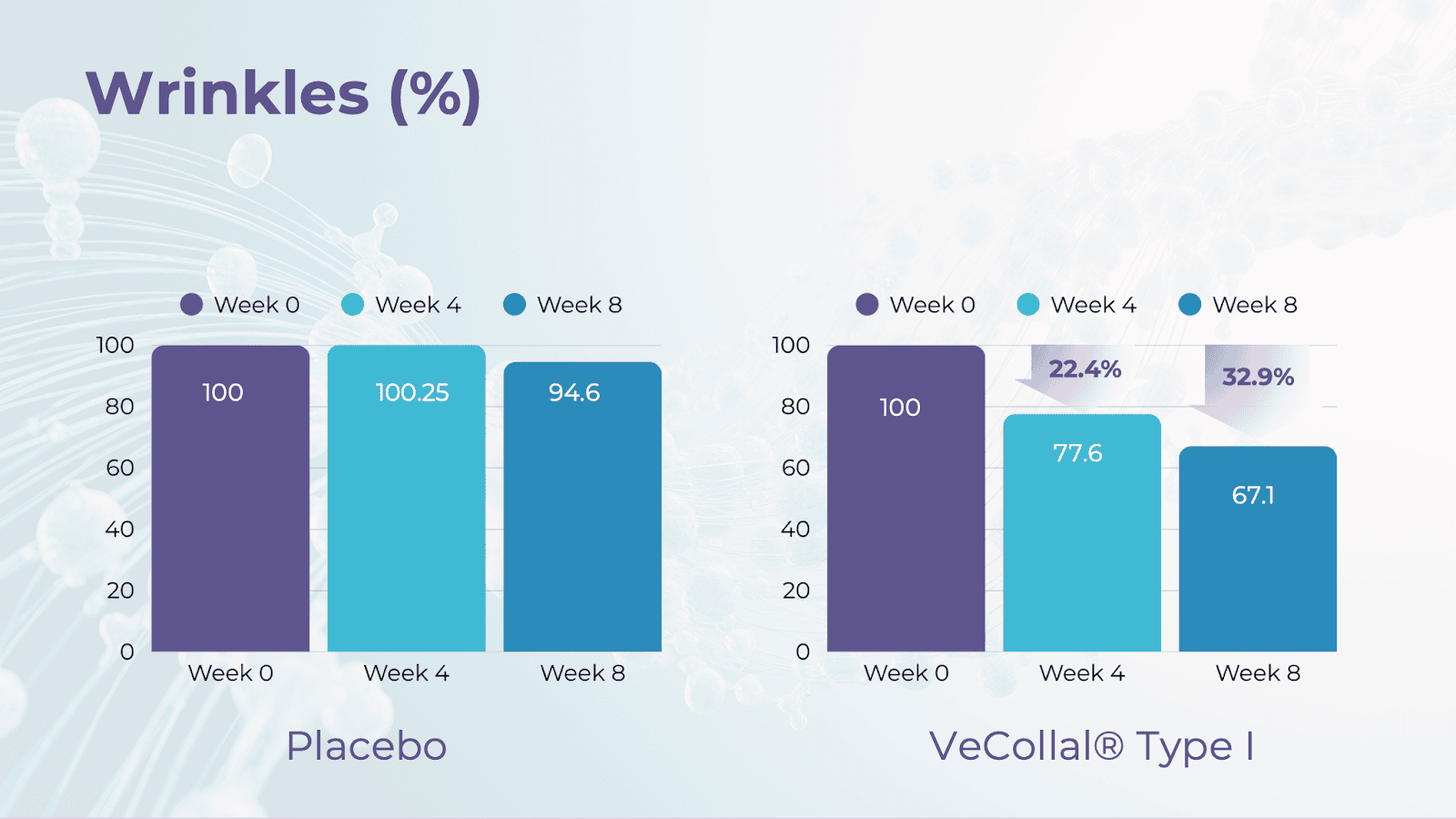
Wrinkles
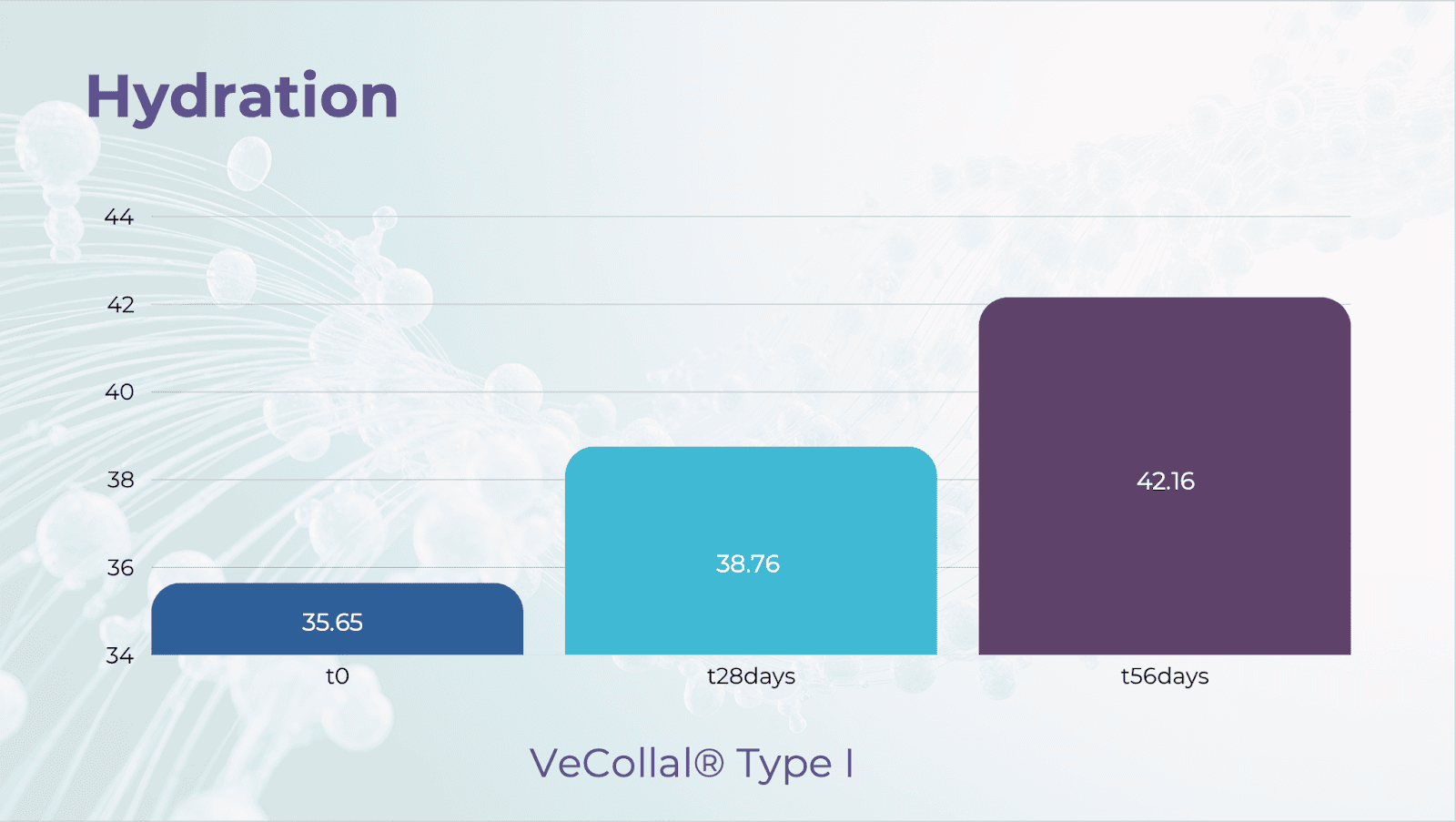
Hydration
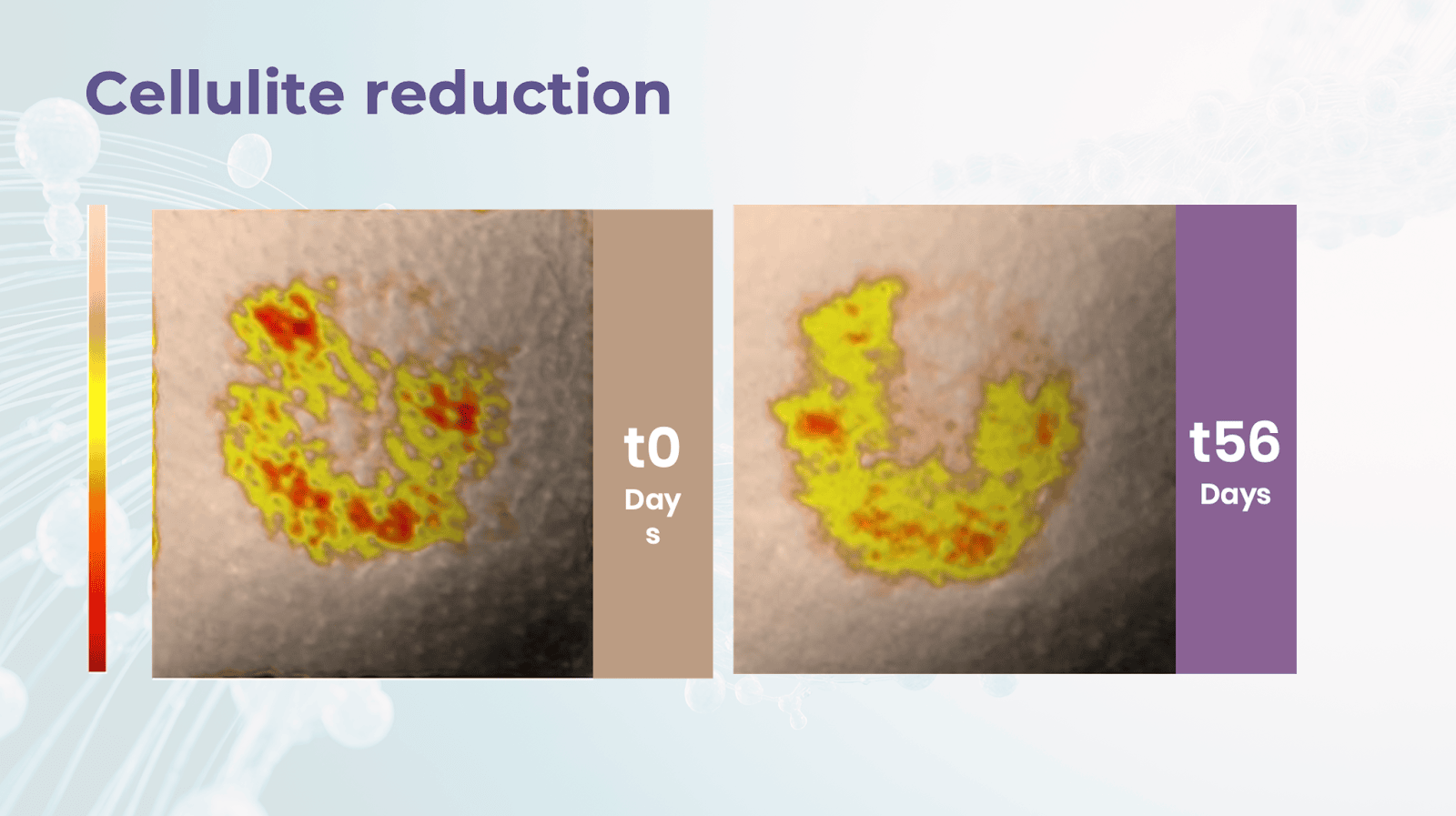
Cellulite
The most recent trial was conducted by Etichub in collaboration with the University of Pavia (Italy) and followed gold-standard protocols: randomized, double-blind, placebo-controlled. Over 56 days, 60 healthy women aged 39–65 took either 5 grams of VeCollal® Type I daily or a placebo.
The results were conclusive — and measured instrumentally using 3D imaging, ultrasound and corneometry:
20.10% reduction in cellulite appearance
21.16% increase in skin hydration
10.5% increase in dermal collagen intensity
That’s not marketing spin. That’s hard data. And it comes at a daily dose of just 5 grams — half or less of what’s typical for animal collagen.
Two studies, one conclusion
These new results follow an earlier clinical trial conducted in Taiwan and published in the Journal of Functional Foods. That first study showed:
32.9% reduction in average wrinkle depth
6% increase in skin elasticity
7.7% increase in skin density
13.1% improvement of skin texture
Together, both studies show a clear pattern: VeCollal® doesn’t just offer a plant-based alternative — it offers clinically proven performance across the full spectrum of skin aging.VeCollal® doesn’t just offer a plant-based alternative — it offers clinically proven performance across the full spectrum of skin aging.
The next generation of collagen
VeCollal® is vegan and halal certified, kosher suitable, non-GMO and allergen-free. It enables brands to meet the growing demand for cleaner, inclusive, science-backed products — without sacrificing performance.